
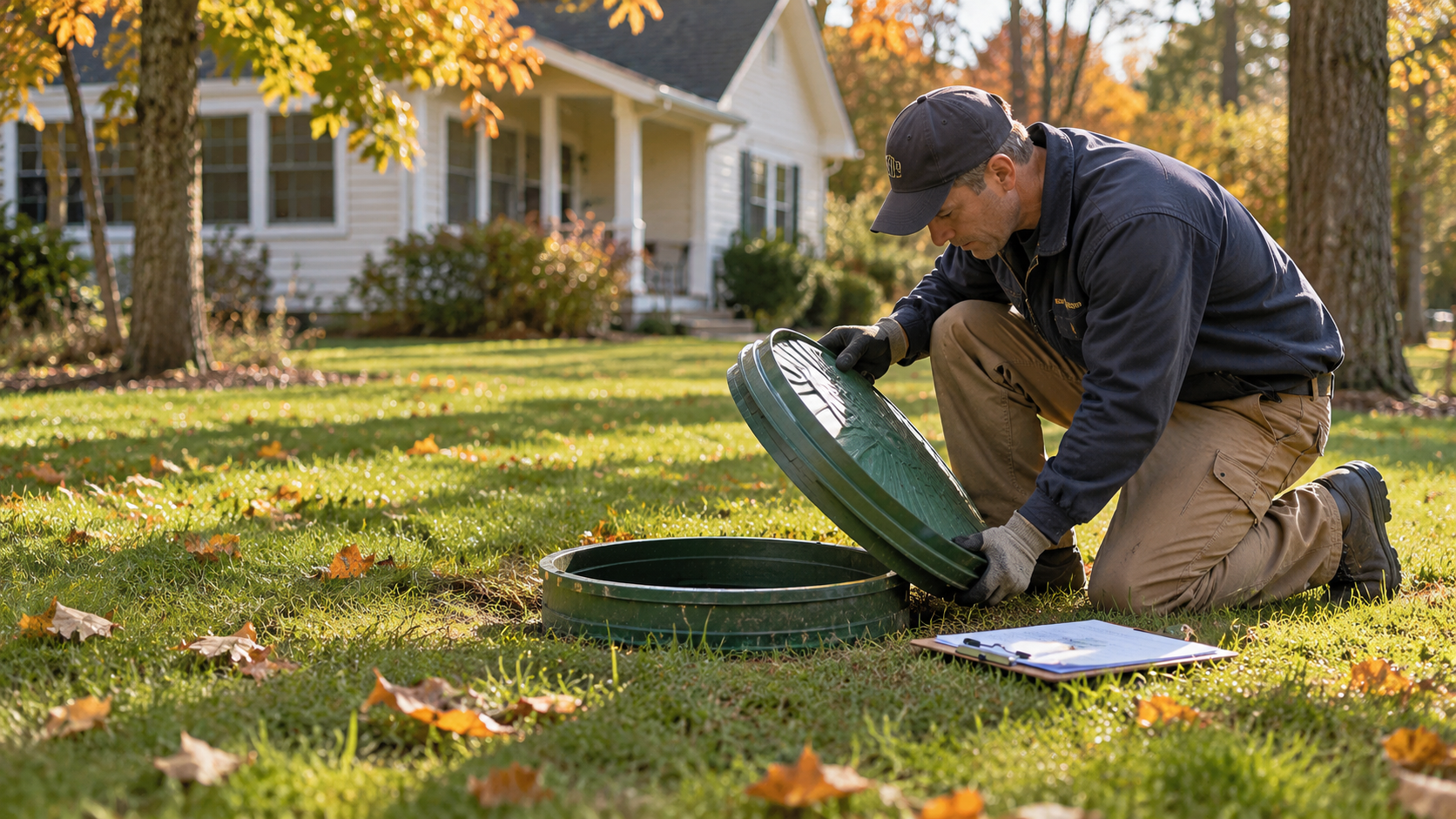
A septic system probably isn't the first thing that comes to mind when you're shopping for a home. You're thinking about the neighborhood, the floor plan, the kitchen, maybe the backyard. But for homes that rely on private septic systems, what's happening underground can be just as important as what you see inside.
A November 18 Bridge Michigan investigation brought renewed attention to a long-running problem: Michigan has about 1.3 million septic systems, and up to 330,000 may be failing or nonexistent. Failing systems can affect groundwater, lakes and streams, and repair costs can be substantial. Those are statewide estimates reported by Bridge Michigan, not a count of failing systems in Washtenaw County.
Washtenaw County already has protections in place
While Michigan does not have a uniform statewide septic code, Washtenaw County has long required evaluations of applicable private wells and septic systems before residential property changes ownership. Under the county's Time of Sale program, inspections are conducted by county-certified private inspectors, and the county reviews the findings. Certain transfers are exempt.
This is especially relevant when considering rural and semi-rural homes around Dexter, Chelsea, Saline, Manchester and parts of Ann Arbor and Ypsilanti. Not every property is affected: homes connected to municipal systems are generally outside these requirements.
Why a septic inspection matters when buying a home
Unlike a roof or furnace, a septic system is difficult to assess during a showing. A yard may look normal even when a drainfield or other underground component is developing problems. Bridge Michigan reported that full replacement can cost $10,000 or more, with some jobs exceeding $15,000; actual costs depend on site conditions and the work required.
Before buying a home with a private system, ask about its installation and maintenance history, whether a current Time of Sale evaluation has been completed, any required corrections, and how the well, tank and drainfield could affect future property improvements. An inspection is valuable information, not a guarantee against future failures.
What sellers should do before listing
For homeowners preparing to sell, scheduling the Time of Sale evaluation early can help avoid closing delays if repairs or additional review are necessary. Gather available installation permits, pumping records, previous inspection reports and repair documentation. Washtenaw County explains that its regulation does not require every older functioning system to be rebuilt to modern construction standards; failing or substantially nonconforming systems may require corrective action.
What about proposed statewide regulations?
Michigan lawmakers have debated broader septic oversight for years. Bridge Michigan's reporting describes a proposal for periodic inspections of systems more than 20 years old. Supporters emphasize water quality and public health, while critics raise questions about costs, implementation and the burden on homeowners. Proposed statewide requirements should not be confused with Washtenaw County's existing Time of Sale program.
Sheila's Take
When you're buying a home, it's easy to focus on the things you can see. But some of the most important parts of a property are the ones you can't. That's especially true with rural properties and homes on larger lots, where private wells and septic systems may be part of everyday homeownership.
I always encourage buyers to understand what they're purchasing, not just the home's appearance and features, but the systems that support it. A septic inspection is an important piece of that picture.
For sellers, my advice is to address these questions early. Knowing the condition of your system and having the appropriate documentation ready can help make the selling process smoother. And for buyers, discovering that a property has a septic system shouldn't automatically be a concern. Many systems function well for years with proper care. What matters is understanding its condition, maintenance needs and any issues that should be addressed.
Good real estate decisions start with good information. That applies just as much to what's underground as it does to everything above it.
Helpful resources
Washtenaw County Time of Sale Program: https://www.washtenaw.org/time-of-sale-program-tos
Bridge Michigan investigation by Kelly House, November 18, 2026: https://bridgemi.com/michigan-environment-watch/michigan-has-ignored-faulty-septic-systems-for-decades-the-bill-is-coming-due/
This article provides general information about septic systems and real estate transactions. Requirements vary by property and circumstances. Confirm applicable requirements with Washtenaw County Environmental Health and qualified inspectors.